1The game100
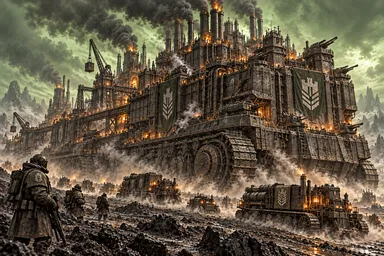
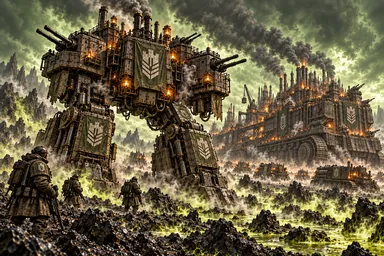
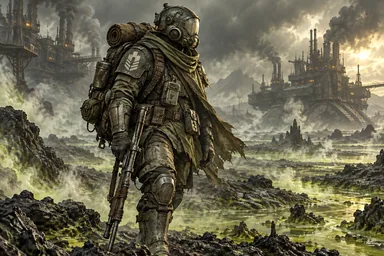
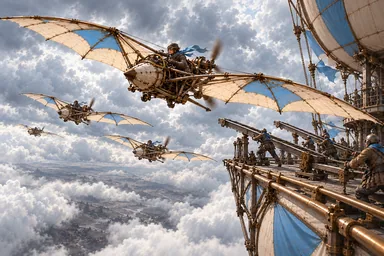
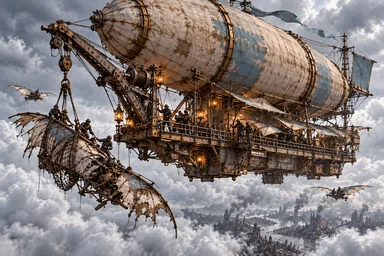
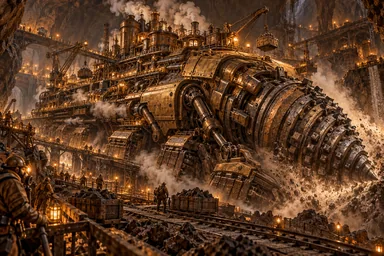
Apocalypships is a card game for two players. A natural disaster has wiped the cities off a steampunk world where electricity was never invented. The survivors live aboard huge battleships, the motherships, and roam the barren world, competing for the little that is left.
You command one mothership and its fleet. Your crew sortie from it: on expeditions, to scavenge spoils, or against the rival mothership, to sink it. Steam from your engines pays for everything.
Each player brings a deck built around their mothership. A match is one game, or the best of three or five games: see Matches and the drydock.
: Supply: Draw 1
Whenever you deploy a Mech or claim an expedition, deploy a Nomad token: a crew with 1 firepower and 1 hull.
: Supply: Dig 2
Watch — : Until end of turn, the firepower of all Moles you control is increased by 1.
The five fleets
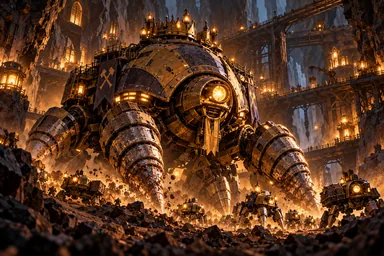
Every card belongs to one of five fleets, or to none. Each fleet has its own steam, its own colour and its own way of fighting. A deck can mix fleets.
| Fleet and its steam | Domain | How they fight | Supply action |
|---|---|---|---|
| Aeronauts | Sky: airships | Strike first from above | Recon X |
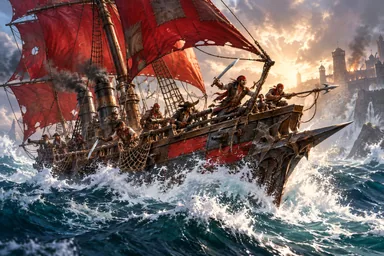
| Corsairs | Sea: surface ships | Hit and run | Plunder X |
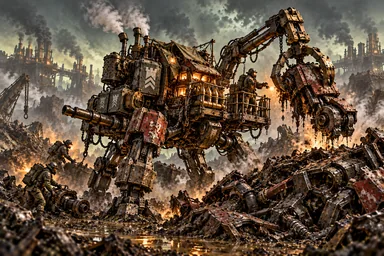
| Ironclads | Land: armoured land crawlers | Grind them down with armour and supply lines | Draw X |
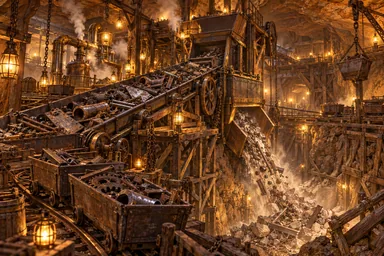
| Sappers | Underground: mines and bunkers | Dig in, build up, then break through | Dig X |
| Abyssals | Underwater: ships beneath the sea | Unseen and patient, winning in their own way | Sift X |
2Winning102
You win a game as soon as one of these happens:
- Sink their mothership. Your opponent’s hull reaches 0. A player’s hull is their mothership’s hull, and you damage it in the sortie.
- Collect the spoils. The spoils of the expeditions you have claimed add up to your mothership’s spoils to win.
- Their hold runs dry. Your opponent has to draw or dig a card while their hold, the pile they draw from, is empty.
- A card says so. Some cards give their player another way to win.
If both players win at the same moment, the game is a stalemate: neither player wins it. It can happen because all battles are fought at once.
You may concede at any time. It counts as losing that game; in a longer match, the next game follows. How games add up to a match, and what happens between them: Matches and the drydock.
3The cards300
Plating 1
- 1Name. The name of the card.
- 2Cost. The steam you pay to deploy it. A coloured pip needs steam of that fleet; a number is steam of any fleet.
- 3Art and frame. The colour of the frame shows the card’s fleet.
- 4Type line. Its card type, its subtypes after the dash (Crew — Mech), and its code.
- 5Text. What the card does. Keywords such as Plating are explained in the Keywords chapter. Hover over a line of text to see what it means.
- 6Firepower. The crew’s strength in battle.
- 7Plating and hull. Hull is how much damage it can take. Plating, when a crew has it, takes damage first.
Anywhere in the game you can hover over a card’s text to see what it means. The card database shows every card, with its rules explained.
Card types
Mothership
Your mothership leads your deck, but it isn’t shuffled into it: it starts every game on board and never leaves it. Its hull is your hull. Its values, along the bottom of the card, shape your whole game:
: Supply: Draw 1
Whenever you deploy a Mech or claim an expedition, deploy a Nomad token: a crew with 1 firepower and 1 hull.
- 7Initiative
- The higher initiative starts the first game of a match, and goes first in every sortie.
- 25Hull
- Your hull at the start of each game. It is your life: at 0, you lose.
- 7Hand size
- How many cards you draw at the start of a game, and the most you keep at the end of your turn.
- 7Spoils to win
- The spoils you need from claimed expeditions to win.
- 40Deck size
- The fewest cards your deck may hold.
It also sets your supply action, what you do at the start of each turn (here: Draw 1), and it can be exhausted for one steam of its fleet. Some motherships have abilities of their own, like the Bastion’s Nomad tokens.
Engines
:
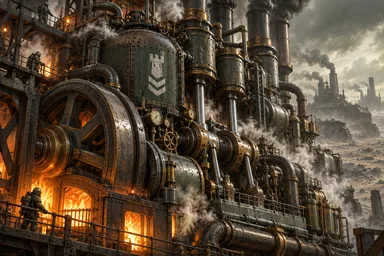
Engines produce steam: exhaust one for one steam of its fleet. Engines aren’t in your deck. Each fleet has a basic engine, there is always one to install, and you install up to one engine a turn. See Steam and engines.
Crew
Your mothership has +1 initiative.
Quickstart
Watch — : Repair 1 damage on a Mech you control.
Crew are the people and machines of your fleet. They stay on board and fight in the sortie. Firepower is their strength in battle, hull how much damage they can take. Damage stays from turn to turn: at 0 hull a crew is destroyed and goes to its owner’s scrapyard.
After the dash in its type line, a crew can have subtypes, such as Mech, Mole or Engineer. They have no rules of their own, but cards refer to them: “Your Mechs have +2 firepower.”
Maneuvers
Deal 3 damage to a base or crew in your opponent's berth.
Draw 3
Maneuvers are one-shot cards: when one resolves, its effect happens and the card goes to your scrapyard. They are the only cards you can deploy during a sortie, and the only cards you can deploy in reaction to another card, your opponent’s or your own. A Deliberate maneuver is the exception: you deploy it like a crew, only in your own watch.
Expeditions
When you claim this expedition, put a +1 firepower/+1 hull marker on each Mech you control.
Expeditions are scavenging missions. You deploy one from your hand like any card, and it is launched into the middle of the board, between the players. From then on, both players can send crew there.
Each player builds up their own progress on it. When your progress reaches its distance, you claim it: you gain its spoils, and it goes to your logbook. You can claim an expedition your opponent launched, and they can claim yours.
Bases
Unique
Your Mechs have +2 firepower.
Unique
Resurface 1
Watch — : Deploy a Mercenary token: a crew with 1 firepower and 1 hull.
Bases are structures in your berth. A base is never dispatched and can’t be attacked in battle, but it has hull, so some cards can damage or destroy it. A base can use its abilities in the turn it arrives.
Tokens
A token is a card an ability makes; it is never in a deck. The Wandering Bastion and Xion II make crew tokens. A token crew is a crew in every way, but when it leaves the board, it stops existing.
4The board400
Both players share one board. Each has their own side of it, their berth, and between the berths lies the middle, where expeditions sit and battles are fought. The game shows you at the bottom:
:
Salvage: Dig 1
If Mining Mole would be put into your scrapyard from the board, shuffle it into your hold instead.
Watch — :
Resurface
If Tunnel Rats would be put into your scrapyard from the board, remove it from the game instead.
A deck may have up to 5 Tunnel Rats.
Dig 2
Salvage — when you install an engine
When you claim this expedition, put a +1 firepower/+1 hull marker on each Mech you control.
When you claim this expedition, you may search your hold for a non-unique Mole and put it on board, then shuffle your hold.
Resurface
Deal 3 damage to a base or crew in your opponent's berth.
:
:
Unique
Your Mechs have +2 firepower.
Plating 1
Your mothership has +1 initiative.
Add
Deploy only while you control a Mech in your berth.
Deal 2 damage to each of your opponent's crew in one battle.
| Zone | What it holds | Who can see it |
|---|---|---|
| Hold | The pile you draw from: your deck, shuffled. | No one sees its cards; both see how many are left. |
| Hand | The cards you have drawn. | You. Your opponent sees how many. |
| Berth | Your side of the board: your mothership, engines, bases and crew. | Both players. |
| The middle | Expeditions, and the battles of the sortie. | Both players. |
| Crossfire | Cards and abilities waiting to resolve. See Deploying cards. | Both players. |
| Scrapyard | Scrapped cards, destroyed crew, resolved maneuvers, and cards that Dig or Recon put there from the hold. | Both players. |
| Logbook | The expeditions you have claimed: your score. Their lasting effects work for you from here. | Both players. |
| Removed from the game | Cards out of the game until it ends. | Both players. |
Ready and exhausted
:
:
A card on board is ready or exhausted. You exhaust a card to use it: an engine for steam, a crew to dispatch it, or a card for an ability with the exhaust symbol in its cost. An exhausted card is turned aside, and it can’t be used again until your next stoke phase, when all your cards become ready.
5Setting up103
- Each player puts their mothership on board, ready, with its starting hull.
- In the first game of a match, the player whose mothership has the higher initiative starts; they can’t let their opponent start instead. With equal initiative, the starting player is chosen at random. For later games, see Matches and the drydock.
- Each player shuffles the rest of their deck: this is their hold. Then they draw as many cards as their mothership’s hand size.
- Each player may refit their hand, the starting player first. To refit, shuffle your hand into your hold, draw a new hand of the same size, and put one of its cards on the bottom of your hold. You can refit only once: you keep the new hand, one card smaller.
- The starting player takes the first turn, and skips its supply phase.
6Steam and engines600
Every cost is paid with steam. Each fleet has its own steam, shown as a pip in its colour: . A cost combines fleet pips and a number. Each pip must be paid with one steam of its fleet, and the number with steam of any fleet. Supply Convoy costs 1: one Ironclad steam plus any one steam.
Where steam comes from
Steam is produced while you pay a cost, by exhausting your steam sources:
:
Salvage: Dig 1
If Mining Mole would be put into your scrapyard from the board, shuffle it into your hold instead.
Watch — :
Add
- Engines: one steam of the engine’s fleet each.
- Your mothership: the steam printed on it, of its fleet: one for most, two for Deep Drill Rig.
- Crew with a steam ability, such as Mining Mole’s “Watch — : ”. A steam crew works only in your own watches, not in the turn it arrives, and an exhausted crew can’t be dispatched.
Steam isn’t stored for long. The sources you exhaust put their steam in your steam pool, and the cost is paid from there. Steam the cost doesn’t need stays in the pool as added steam until the end of the phase. An effect that says “Add ”, as Soil Extraction does, gives you steam to keep until the end of the phase. It pays your next costs first.
Installing engines
Building up engines is the backbone of your game. You may install one engine each turn, in either of your watches while the crossfire is empty, in one of two ways:
- Unlocked, for free. Each fleet has one unlock condition. While you meet it in your turn, that fleet’s basic engine is unlocked, and you may install it without paying anything.
- By scrapping a card. Scrap a card from your hand, and install the basic engine of that card’s fleet. A card of no fleet can’t be scrapped for an engine.
| Engine | Unlocked for free while, this turn… |
|---|---|
| Aeronauts | You dispatched at least 2 crew to the mothership battle this turn. |
| Corsairs | You scrapped at least 2 cards this turn outside your supply phase. |
| Ironclads | You deployed a crew with at least 4 hull this turn. |
| Sappers | A card was salvaged or resurfaced this turn. |
| Abyssals | Your opponent dug at least 2 cards this turn. |
A condition counts only what has happened since your turn began. You can install any fleet’s engine, even one your deck doesn’t use. An engine comes in ready, so it can pay for something in the turn you install it.
7A turn500
Players take turns. The player whose turn it is is the active player. Each turn has seven phases, in this order:
- 1Supply phaseYour mothership’s supply action
- 2Stoke phaseYour cards become ready
- 3Maintenance phaseMaintenance costs
- 4First watchDeploy cards, install an engine
- 5Sortie phaseDispatch crew and battle
- 6Second watchDeploy cards, install an engine
- 7Stow phaseScrap down to your hand size
- 1. Supply phase
- You perform your mothership’s supply action, and nothing else. There is no normal draw: you draw only if your supply action says so. The Wandering Bastion draws 1; The Mother of Moles digs 2, putting the top two cards of its hold into the scrapyard, where the Sappers get their cards back from. Deep Drill Rig, also a Sapper mothership, draws 1: a fleet’s supply action is only the usual one, and a mothership can differ. The starting player skips this phase on the first turn of the game.
- 2. Stoke phase
- All your exhausted cards become ready: engines, mothership, crew and bases.
- 3. Maintenance phase
- For maintenance costs and effects “in your maintenance phase”. The Aerie, an Aeronaut mothership, deploys a Glider token here for each Dirigible you control; made outside a watch, they can attack this turn.
- 4. First watch
- Your main phase. While the crossfire is empty, you may deploy cards from your hand, install your engine for the turn, and use Watch abilities, in any order and as often as you can pay. See Deploying cards.
- 5. Sortie phase
- Crew are dispatched and battles fought. See The sortie.
- 6. Second watch
- Like the first watch, after the battles.
- 7. Stow phase
- Scrap cards from your hand until you have no more than your hand size; you choose which. Then effects that last “until end of turn” end, and every crew’s plating comes back.
8Deploying cards604
The crossfire
To deploy a card is to play it from your hand: you pay its cost, and it goes into the crossfire to wait. Your opponent gets the first chance to react to it.
A reaction is a maneuver deployed on top of the crossfire. Both players can react, to their opponent’s cards and to their own, and a reaction can be reacted to in turn. When both players pass one after the other, the card on top resolves. So the last card added resolves first.
- Underground Detonation3
 Maneuver · Sappers
Destroy a base.
Resurface . A resurfaced Underground Detonation is removed from the game after it resolves.
On top: resolves firstUnderground Detonation, deployed by your opponentTheir reaction, aimed at your base. - Rampart Walker3Crew — Mech · Ironclads214
Plating 1
At the bottom: resolves lastRampart Walker, deployed by youDeployed in your first watch.
In your watch, your opponent can only react to what you deploy. Installing an engine and producing steam can’t be reacted to. Nothing can be reacted to in the supply, stoke, maintenance and stow phases.
Put a card waiting in the crossfire on top of its owner's hold.
Stowaway
Return a card waiting in the crossfire to its owner's hand unless they pay 2.
Some maneuvers take a card out of the crossfire before it resolves. You choose a card waiting there, either player’s, when you deploy one; an ability waiting there isn’t a card. The card never resolves: a crew never comes on board, a maneuver’s effect never happens, and the steam paid for it stays spent. It goes where the maneuver says, back to its owner’s hand or on top of their hold, never to the scrapyard. A token taken out stops existing.
New crew
Your mothership has +1 initiative.
Quickstart
Watch — : Repair 1 damage on a Mech you control.
Outrider
A crew that comes on board during a watch can’t be dispatched in that turn, and can’t use an ability with in its cost, unless it has Quickstart. One with Outrider can be dispatched in that turn, but only to an expedition. The board marks it with an hourglass . From the next turn on, your opponent’s turn included, it can: a crew you deploy in your watch can already defend in your opponent’s next sortie.
Abilities
Watch — : Put a +1 firepower marker on another Mech you control.
An activated ability is one you choose to use. It begins with the phase it works in:
- Watch — in your own watches, while the crossfire is empty. It happens at once, and no one can react to it.
- Sortie — in the windows of a sortie, by either player. It goes into the crossfire and can be reacted to.
The exhaust symbol in a cost means “exhaust this card”. Forge Hauler exhausts itself to put a +1 firepower marker on another Mech.
A cost can also be steam alone, such as Deep Drill Rig’s “Watch — : Dig 1”. It exhausts nothing, so you can use it again and again, as long as you can pay.
A triggered ability happens by itself when something occurs, such as “Whenever you deploy a Mech”. A static ability, such as Spider Crawler’s “Your mothership has +1 initiative”, simply applies while its card is on board.
Watch the wording of a crew’s own trigger. “When you deploy Scrapyard Crawler” happens as you play it, while it waits in the crossfire, before your opponent can react. “When Hired Cutlass comes on board” waits until the card has resolved and is on board, and it also happens if the card is put on board without being deployed, as by Resurface.
9The sortie700
The sortie is the battle of the turn. Both players take part in every sortie, also on their opponent’s turn, but only the active player can damage a mothership or make progress on an expedition. On your opponent’s turn, you defend.
- 1First windowManeuvers and Sortie abilities
- 2DispatchSend crew to the battles
- 3Second windowManeuvers and Sortie abilities
- 4BattleEvery battle at once; no one can act
- 5Final windowManeuvers and Sortie abilities
Initiative
The player with the higher initiative:
- gets the first chance in every window;
- dispatches last, knowing where the other player’s crew went;
- assigns the damage in every battle, the ones they lose included.
With equal initiative, the active player counts as higher. Effects such as Spider Crawler’s +1 change it at once, even in the middle of a sortie.
Windows
In a window, both players may deploy maneuvers and use Sortie abilities, the higher initiative first. A window ends when both players pass in a row with the crossfire empty. No other cards can be deployed during a sortie.
Dispatch
Each player sends each of their ready crew to one place, or keeps it in their berth:
| Sent to | On your turn | On your opponent’s turn |
|---|---|---|
| The mothership battle | Attack your opponent’s mothership. | Defend your mothership. |
| An expedition | Make progress on it, whoever launched it. | Fight their crew there. You make no progress. |
| Nowhere: your berth | No battle. | No battle: it doesn’t defend. |
The lower initiative dispatches first. Dispatching exhausts a crew, and crew become ready only in their owner’s stoke phase: a crew that attacked on your turn can’t defend on your opponent’s.
Battle
Every battle is fought at once: the mothership battle, and each expedition with crew at it. In each, both players add up their crew’s firepower. The higher total wins, and the difference is the winner’s margin. With equal totals, nothing happens there. A player alone in a battle wins it, with their whole firepower as the margin. No one can act during the battle step.
Damage
In the mothership battle, the margin is dealt to the losing side, the loser’s crew there first. Each of them must be given enough damage to destroy it before any damage reaches the mothership; the rest hits the mothership. The higher initiative assigns the damage and may split it among the losing crew, but no crew can be given more than it takes to destroy it.
Plating 1
Your mothership has +1 initiative.
Resurface — when you have dug 4 cards this turn
Only the active player’s margin can reach a mothership. If the defender wins the mothership battle, the margin is dealt to the attacking crew, and what is left of it is lost.
Damage stays
Plating 1
A crew’s hull doesn’t recover at the end of the turn: damage stays until something repairs it, such as Field Riveters. At 0 hull, the crew is destroyed.
Plating is the exception. It takes damage before the hull, and it comes back in full at the end of every turn. This Rampart Walker has taken 3 damage: 1 to its plating, 2 to its hull. Its plating will be back at the end of the turn; its hull stays at 2.
Expeditions
The winner of an expedition battle on their own turn chooses one:
- Damage: deal the margin to the losing crew there. If all of them are destroyed, the rest of the margin counts as progress.
- Progress: add the whole margin to their progress on the expedition.
On your opponent’s turn you can’t make progress: winning there only damages their crew, and the rest of the margin is lost. So an expedition is always claimed on its claimer’s own turn.
When you claim this expedition, put a +1 firepower/+1 hull marker on each Mech you control.
Plating 1
Resurface — whenever an expedition is launched, by either player
A claimed expedition goes to its claimer’s logbook, and both players’ progress on it ends. Until then, progress stays from turn to turn.
An expedition’s lasting effect, such as The March to Ironhold’s +1 initiative, doesn’t end when it is claimed: it works from the logbook for the rest of the game, for whoever claimed it. Claim your opponent’s March to Ironhold, and the +1 initiative is yours.
10Keywords800
Keyword actions
| Add steam | “Add ”: you keep this steam until the end of the phase. See Steam and engines. |
|---|---|
| Destroy | Put a crew or base into its owner’s scrapyard, whatever its hull and plating. “Every crew in one battle” means both players’ crew in the battle you choose. |
| Dig X | Put the top X cards of your hold into your scrapyard. “Your opponent digs X” does it to their hold. Deep Drill Rig digs one at a time, for steam. |
| Draw X | Put the top card of your hold into your hand, X times. “Draw up to X”: choose how many, from 0 to X. |
| Plunder X | Draw X cards, then scrap any X cards from your hand. |
| Recon X | Look at the top X cards of your hold. Draw one of them, and put the rest into your scrapyard. |
| Repair X | Remove up to X damage from a crew; “fully repair” removes all of it. Never above its printed hull. |
| Scrap | Put a card from your hand into your scrapyard. Only this is scrapping: destroyed crew and dug cards reach the scrapyard too, but they weren’t scrapped. |
| Search | Look through your hold for a card of the kind named, show it and put it into your hand, then shuffle your hold. |
| Sift X | Look at the top X cards of your hold. Draw one of them, and put the rest on the bottom in any order. |
Keywords
Deliberate
A maneuver you deploy like a crew: only in your own watch, while the crossfire is empty. Never as a reaction, and not in the sortie. Your opponent sees it coming and can react to it in the crossfire, with Swallowed by the Deep, Heave To! or Wash away! for instance.
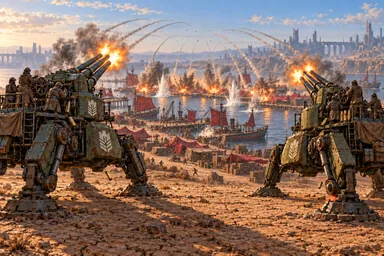
Deliberate
Deploy only while you control two Mechs in your berth.
Deal 2 damage to every crew in target opponent's berth.
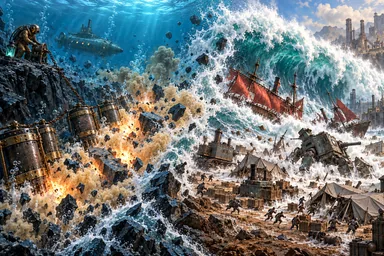
Deliberate
Destroy every crew in all berths.
Extra cost
A cost besides steam, such as exhausting a Mech in your berth. You pay it when you deploy the card; if you can’t, you can’t deploy it.
Deploy only while you control a Mech in your berth.
Deal 2 damage to each of your opponent's crew in one battle.
Instead
A card that “would” do something and does something else “instead” never does the first thing. Tunnel Rats destroyed in battle leave the game without reaching the scrapyard, so they can’t resurface from there.
Resurface
If Tunnel Rats would be put into your scrapyard from the board, remove it from the game instead.
A deck may have up to 5 Tunnel Rats.
Jettison
Jettison — [effect]: when a Recon puts this card into your scrapyard, you may use the effect. Only Recon: a card scrapped, dug or destroyed doesn’t. With several, you choose the order, and may stop. Outside the sortie it happens at once and no one can react; in the sortie it goes into the crossfire first. A target is chosen as it happens.

Quickstart
Jettison — deal 1 damage to any target.
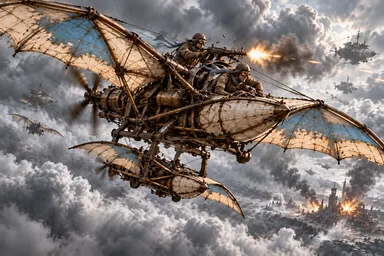
Quickstart
Jettison — deploy a Glider token: a crew with 1 firepower and 1 hull.
Markers
A +1 firepower marker gives its crew 1 more firepower for as long as it stays on board. Markers add up, and a card that leaves the board loses them.
Your mothership has +1 initiative.
Outrider
In the turn it comes on board during a watch, the crew can be dispatched to an expedition, but not to the mothership battle. From the next turn on, your opponent’s included, it is like any other crew. It still can’t use its own abilities with in their cost in that turn.
Outrider
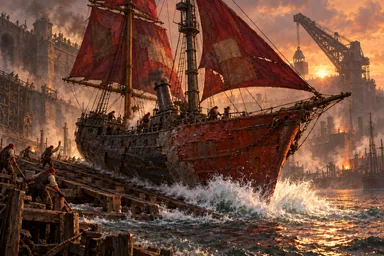
Outrider
Plating X
Damage goes to the plating first, up to X; only the rest reduces the hull. The plating comes back in full at the end of every turn.
Plating 1
Quickstart
The crew can be dispatched, and use abilities with in their cost, in the turn it arrives.
Quickstart
Watch — : Repair 1 damage on a Mech you control.
Refuel X
A cost: put X cards from your scrapyard on the bottom of your hold, in the order you choose. With fewer than X there, you can’t pay it. It keeps a deck that recons from running out of cards. Refueled cards aren’t salvaged, so they don’t unlock the Sapper engine.
As an extra cost, Refuel 2.
Deploy two Glider tokens: crews with 1 firepower and 1 hull.
Watch — , Refuel 2: Deploy a Glider token: a crew with 1 firepower and 1 hull.
Resurface
Resurface — [when]: when that happens while the card is in your scrapyard, you may put it on board. It always happens in a watch; a trigger outside one waits for the next. Resurface [cost]: in your watch, pay the cost to put it on board from your scrapyard. Either way it isn’t deployed, so no one can react, and a resurfaced crew is new. A maneuver with Resurface, such as Sinkhole, is deployed again from the scrapyard for its Resurface cost.
Resurface — when you have dug 4 cards this turn
Resurface 1
If Tunnel Runners would be put into your scrapyard from the board, shuffle it into your hold instead.
Revealed
A revealed card is shown face up to both players, and stays where it is. Deep Drill Rig reveals the top card of its hold: both players see what its player will draw next, and each dig shows the card below. You can’t play a card from the hold.
: Supply: Draw 1
The top card of your hold is revealed to both players.
Watch — : Dig 1
Salvage
Salvage — [when]: when that happens while the card is in your scrapyard, you may return it to your hand. Salvage [cost]: in your watch, pay the cost to return it from your scrapyard to your hand, as often as you can pay. Prospector Mole’s price is a dig: “Salvage: Dig 1”.
Stowaway
When you scrap this card from your hand, for whatever reason, you may pay its Stowaway cost to deploy it instead. It still counts as scrapped.
Stowaway 1
Unique
You can have only one copy on board at a time; your opponent can have their own. Your deck may still hold more. A unique expedition can be claimed only once per player.
Unique
Your Mechs have +2 firepower.
11Building a deck900
- One mothership. It can’t change between the games of a match.
- A minimum deck size. Your deck needs at least as many cards as your mothership’s deck size. There is no maximum.
- At most 3 copies of a card. A card on the restricted list may be in a deck only once; restricted now: none. A card can also set its own limit: “A deck may have up to 5 Tunnel Rats.”
- Any fleets. A deck can mix the cards of any number of fleets. Their costs need their fleets’ steam.
- Expeditions are part of the deck and count toward its size. Engines aren’t: basic engines are always there to install.
- A drydock of up to 10 cards, if you want one: cards kept beside your deck, to swap in between the games of a match. The 3-copy limit counts your deck and drydock together. How the swap works: Matches and the drydock.
The Decks page has a prebuilt deck for each fleet. Copy one into the deck builder to make it your own.
12Matches and the drydock902
Before a match, the players agree how long it is. In this app, you choose it in the lobby.
| Match | Who wins it | Used for |
|---|---|---|
| Best of one | The winner of its only game. | A quick casual match. There is no game after it, so no drydock swap. |
| Best of three | The first player to win two games. | Every regular match. |
| Best of five | The first player to win three games. | A tournament’s final. |
A match ends as soon as one player has won enough games: the rest aren’t played. If the games run out first, because some were stalemates, the player who won more games wins the match. With equal wins the match is drawn, except in a tournament’s top cut: there, games go on until one has a winner.
Between two games
- Who starts. After a game that someone won, the player who lost it chooses who starts the next one. After a stalemate, the player who didn’t start that game starts the next one.
- The drydock swap. Each player with a drydock may swap cards with it, the starting player first. You already know whether you start, so you can choose your cards for it.
- A new game. It is set up as the first one was (Setting up): motherships back at their starting hull, holds shuffled, new hands, and a refit for each player. Nothing on the board carries over: only your deck, as the last swap left it.
Time. In a match against another player, each of you has 25 minutes for the whole match, as on a chess clock. Only the clock of the player who must decide runs; when you pass in the crossfire, your opponent's clock starts. If your time runs out, you lose the match, whatever the score. A best-of-five final has no clock.
The drydock
Your drydock is up to 10 cards kept ashore beside your deck. You build it with your deck, in the deck builder. It holds the cards your deck can hold: no mothership, no engines, no tokens. The 3-copy limit counts your deck and your drydock together. It can be smaller than 10, or empty.
A drydock is for the cards that are strong against one deck and weak against the others. You find out what you are up against in game 1, then bring the answers aboard.
- One in, one out. For every card you take out of your deck, you put one in from your drydock. Your deck keeps its size; the cards you took out go into the drydock.
- Before every game. You may swap again before each later game. Each swap starts from your deck as the last one left it, so you can also swap a card back. Or you keep your deck as it is.
- Hidden. Your opponent sees that you swapped, never which cards or how many.
- The mothership stays. It can’t change between the games of a match.
When you deploy Scrapyard Crawler, remove up to 3 cards in your opponent's scrapyard from the game.Scrapyard Crawler gets +1 firepower and +1 hull for each crew card removed this way.
13Playing in this app
Ways to play
Start a match from the lobby: choose the game mode first, then the decks. You play a prebuilt deck or one of your own; a bot plays only the prebuilt decks it has been tuned for.
- Play vs bot: a full match against the computer.
- Goldfish practice: you play alone, against a mothership of no fleet that never acts. How many turns does your deck need to win?
- Hot seat: you play both seats on one screen, which always shows the player who has to decide.
- Watch bot vs bot: a good way to see the rules at work.
On the board
- Hover over any card to see it in full in the side panel. Right-click a card to enlarge it.
- The action bar in the side panel says what you are deciding. Cards you can deploy or use now are highlighted: click one to use it.
- Before you deploy a card, click the steam sources you want to pay with; otherwise they are chosen for you.
- In the dispatch, drag your crew onto the opposing mothership or an expedition, or click a crew to go through its choices.
- Space presses the main button, such as Pass or End watch. With Auto-pass on, the game passes for you whenever passing is all you can do.
- Click a scrapyard or a logbook, yours or your opponent’s, to look through it. The side panel also shows the phase and the game log.
14Glossary
- Active player
- The player whose turn it is. →
- Added steam
- Steam an effect adds, or steam a source made that a cost didn’t need. You keep it until the end of the phase, and it pays your costs first. →
- Base
- A structure in your berth. Never dispatched, never attacked in battle, but it has hull. →
- Berth
- Your side of the board: your mothership, engines, bases and crew. →
- Claim
- To complete an expedition: your progress reaches its distance. You gain its spoils. →
- Crew
- Cards that stay on board and fight, with firepower and hull. →
- Crossfire
- Where deployed cards, and abilities used in a sortie, wait to resolve. The last one added resolves first. →
- Deploy
- To play a card, normally from your hand, by paying its cost. →
- Dispatch
- The sortie step where crew are sent to the mothership battle or an expedition. →
- Distance
- The progress needed to claim an expedition. →
- Drydock
- Up to 10 cards kept beside your deck. Between games you swap cards with it, one in for each one out. →
- Engine
- A card that produces steam. Not in your deck: you install one a turn. →
- Exhaust, ready
- You exhaust a card to use it; it becomes ready again in your stoke phase. →
- Expedition
- A scavenging mission in the middle of the board. Both players can claim it. →
- Firepower
- A crew’s strength in battle. →
- Hold
- The pile you draw from. Drawing from an empty hold loses the game. →
- Hull
- How much damage a card can take. Your mothership’s hull is your life. →
- Initiative
- A mothership value. The higher initiative goes first in sorties, dispatches last and assigns battle damage. →
- Install
- To put a basic engine on board: for free when unlocked, or by scrapping a card of its fleet. →
- Jettison
- A keyword: when a Recon puts the card into your scrapyard, you may use its effect. →
- Logbook
- Where your claimed expeditions go: your score. Their lasting effects keep working for you from there. →
- Maneuver
- A one-shot card. The only cards you can deploy in a sortie, or as a reaction. →
- Margin
- How much the winner of a battle won by: it becomes damage or progress. →
- Match
- One game, or the best of three or five games. Between games, the loser chooses who starts and the players may swap cards with their drydocks. →
- Mothership
- Your ship and your life. It sets your initiative, hull, hand size, spoils to win, deck size and supply action. →
- New crew
- A crew that came on board during a watch this turn: it can’t be dispatched or exhausted for an ability yet. →
- Outrider
- A keyword: in the turn it came on board during a watch, the crew can be dispatched to an expedition, but not to the mothership battle. →
- Progress
- Each player’s own total on an expedition, built up from battle margins on their turns. →
- Reaction
- A maneuver deployed on top of the crossfire, in response to a card or ability. →
- Refuel X
- A cost: put X cards from your scrapyard on the bottom of your hold, in the order you choose. →
- Scrap
- To put a card from your hand into your scrapyard. →
- Scrapyard
- Where scrapped, destroyed, resolved and dug cards go. →
- Sortie
- The phase where crew are dispatched and battles fought. →
- Spoils
- What an expedition is worth. Reach your spoils to win, and you win. →
- Stalemate
- A game both players win at the same moment: no one wins it. →
- Steam
- What costs are paid with. Each fleet has its own. →
- Token
- A card an ability makes. It stops existing when it leaves the board. →
- Watch
- Your two main phases, before and after the sortie, where you deploy cards from hand. →
- Window
- A moment in the sortie when both players can deploy maneuvers and use Sortie abilities. →